
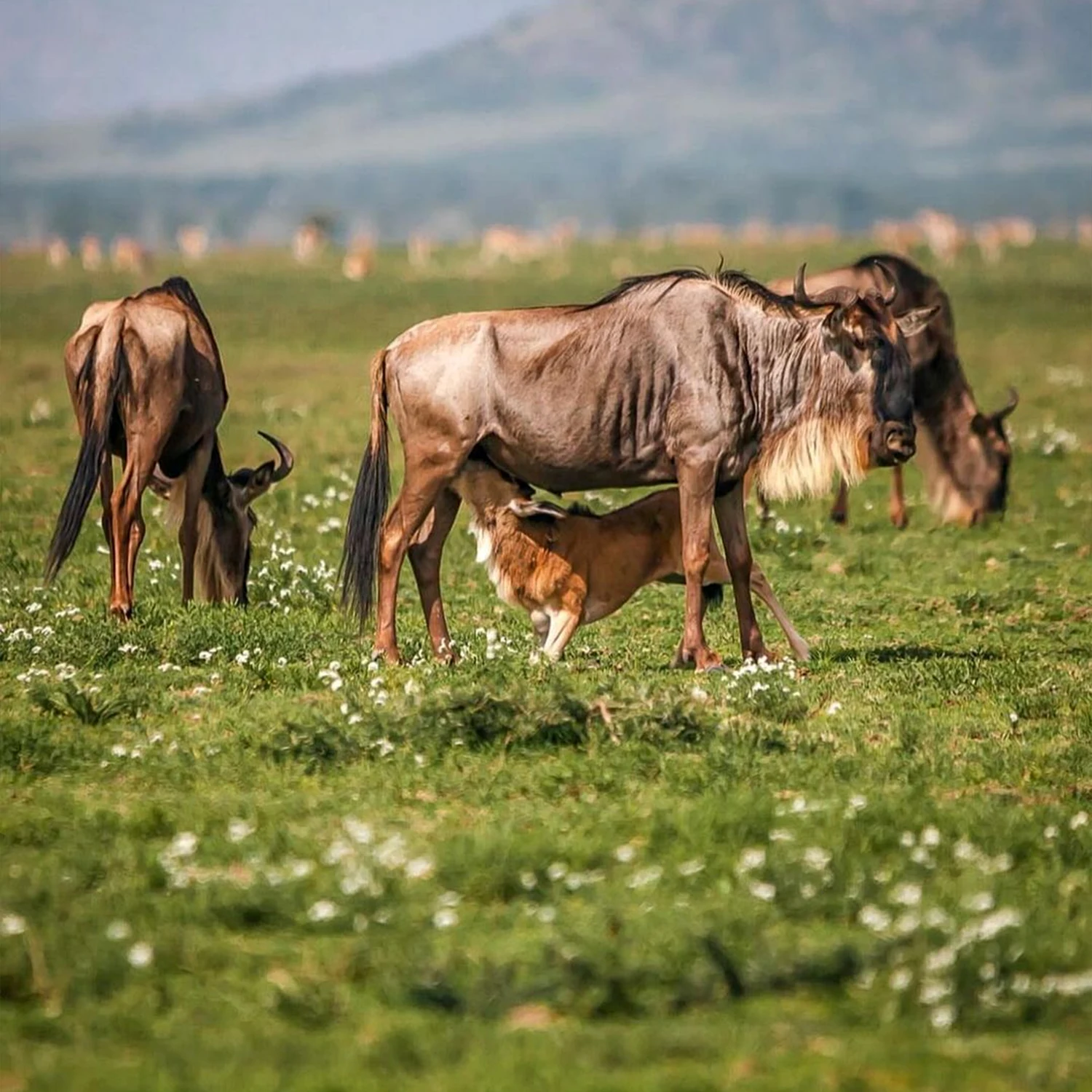
Ndutu becomes the center of many migration safaris from roughly December through March. The attraction is a broad seasonal ecosystem rather than one fenced park boundary, with wildlife moving between the southern Serengeti and Ngorongoro Conservation Area.
What makes the season different The short-grass plains provide nutrient-rich grazing after the rains. Large numbers of wildebeest and zebra spread through the area and many calves are born during the season. Predators respond to the concentration of prey.
Photography Low grass creates cleaner backgrounds than many dry-season areas. Soft green color, dramatic skies and active predators make Ndutu especially popular with photographers. A private vehicle allows more control over position and patience.
How long to stay Three nights is a strong minimum for a migration-focused safari. Four nights gives more time to respond to changing wildlife concentrations and reduces the risk of spending the whole stay in transit.
Combining Ndutu Ngorongoro Crater combines naturally with Ndutu, and Central Serengeti can be added for different habitat and resident big-cat viewing. The route can begin or end in Arusha depending on flights and accommodation availability.
Planning a Northern Tanzania safari?
Send your dates, group size and preferred safari style for a route built around the season and your priorities.
Plan Your Safari